Guides
09 | 02 | 26
How creative event design drives better decisions – and better events
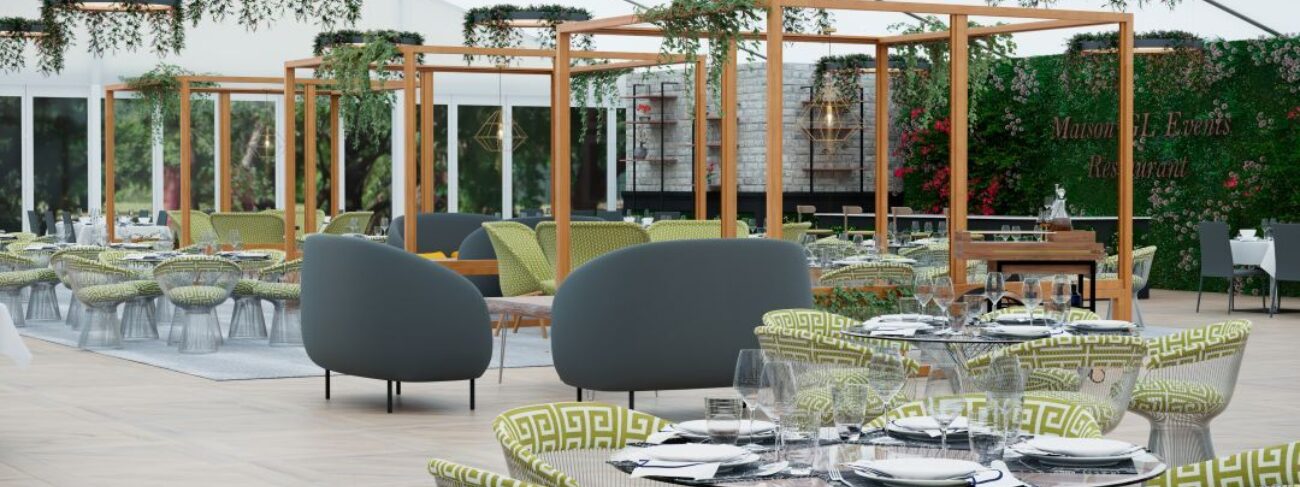
What if you could step inside your temporary event structure… before it’s even built? With creative event design, you can.
Combining aesthetics, spatial planning, project management and operations expertise with the latest visualisation technology, it puts you right inside your structures, so you can make better decisions about everything from shape and size to finishings and flow.
At GL events, creative event design is all part of the service. So in this guide, we talk to Design Manager Paul Kirkwood and Project Director Tom Alldread about how it works – and why it’s such a great way to achieve a smooth, successful event project.
What do we actually mean by creative event design?
Tom: When we talk about creative event design, we’re talking about the process we use to bring our clients’ events to life. Not just literally, but figuratively too. It’s about understanding everything they want to achieve – everything they’ve got their sights set on – and then working as a team, bringing our different skills together to design a space that makes that happen.
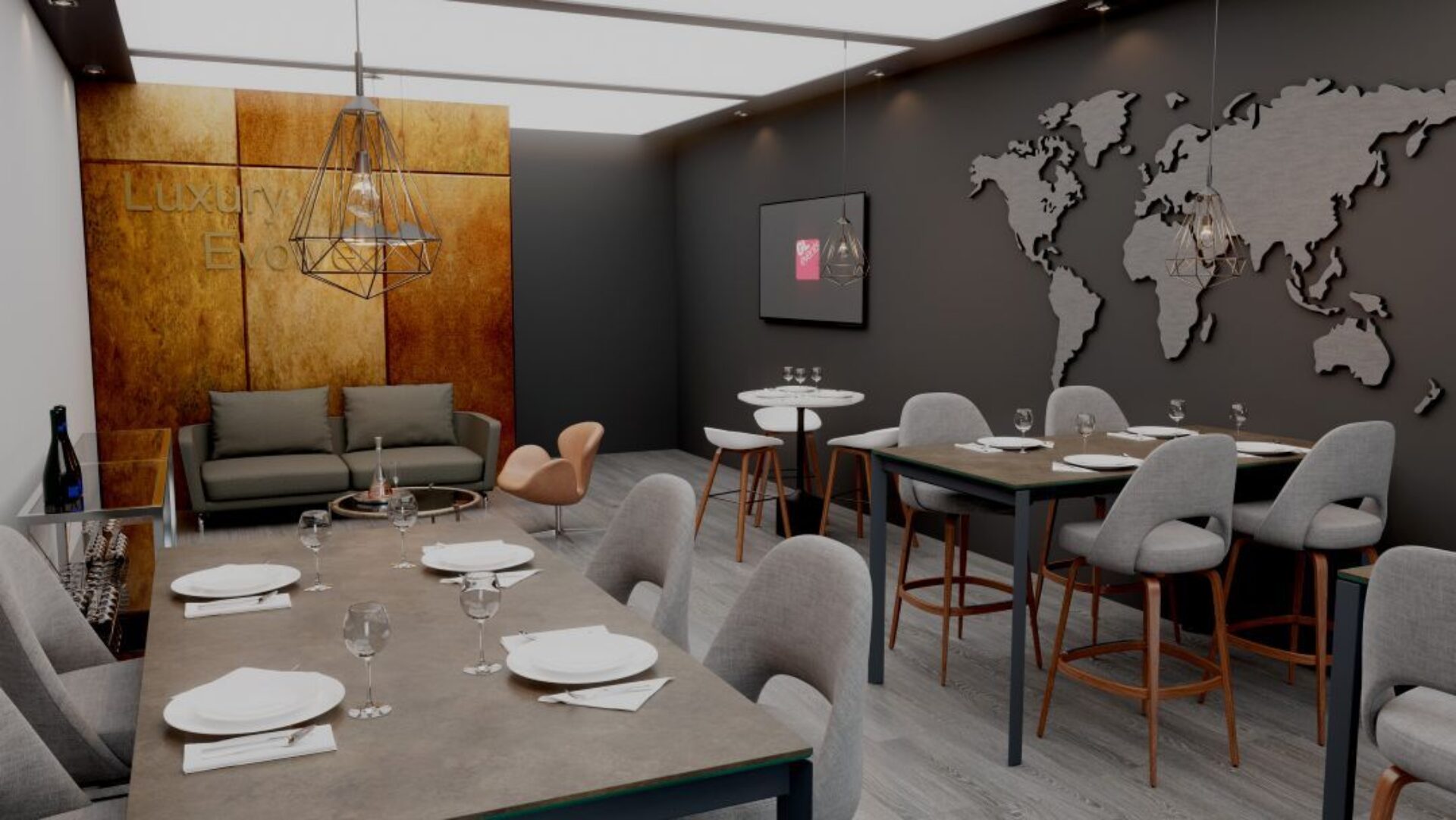
A really exciting but also hugely helpful part of that process is using CAD and visual fly-through technology. They bring the space to life before it even exists, so clients can step in, experience it and make informed decisions about what’s working and what to spend their money on.
Paul: For me, it’s about creating an immersive experience. It’s not just the structural design — it’s the flow, the atmosphere, and how the space feels. Ultimately, it’s about how the client and their audience experience the event and the memories they take away from it. Creative event design brings all of those elements together, starting with the end goal and using creativity and innovation to solve both the creative challenge and the fundamental constraints along the way.
Is it something you use on every project?
Paul: We try to look at each event or project separately and judge what it – and the client – really needs from us. In terms of visualisation, if it’s a smaller project and there isn’t a big area to fly through, I often think 3D images work best because people can keep referring back to them.
But for larger events where we’ve got interlinked structures, perhaps different design options, you can definitely visualise that best with a fly-through video, because you can literally take the client into that space and they can travel through the experience, before we’ve actually built it.
Tom: It’s important to recognise different clients’ personalities as well. Some people are more creative, while others might understandably struggle to picture how a space or structure is going to work. As a team, we get to know them so we can visualise it in a way that works for them.
If their event was going to be in a permanent fixed venue, they’d be able to go and walk around – with creative event planning and our visualisation tech, even if all that’s currently there is an empty field, they can still have that walk-around experience.
Can you use creative event planning to show structures in-situ?
Paul: Absolutely, and that’s really helpful. Our tech can show temporary event structures on the actual site where they’ll stand. A lot of big event spaces like the major golf courses are already modelled, so we can apply our designs to those models. But if they’re not, we can use physical site surveys and 3D drone footage, importing that into our 3D software to map out the area and dropping in things like the surrounding trees and vegetation.
That all gives us a clear picture of the topography and textures so we can accurately determine levels and scaffold heights. If it’s a new site, that’s especially important because you might stand out there and say it looks flat, but by the time you’ve put a 100 metre-long structure on it, you find that one end is two or three metres up in the air. Our tech means we can map that topography and visualise it. For the client, it creates a really accurate representation of exactly what we’re going to build, and how it’s going to sit in that landscape.
The visuals can also come into their own when we’re looking at things like sight lines, especially for seating or grandstand projects. We can pick out any seat in a venue or temporary structure and show the client what the view will be like from there – whether the audience is looking out across a field of play or at the action taking place on stage.
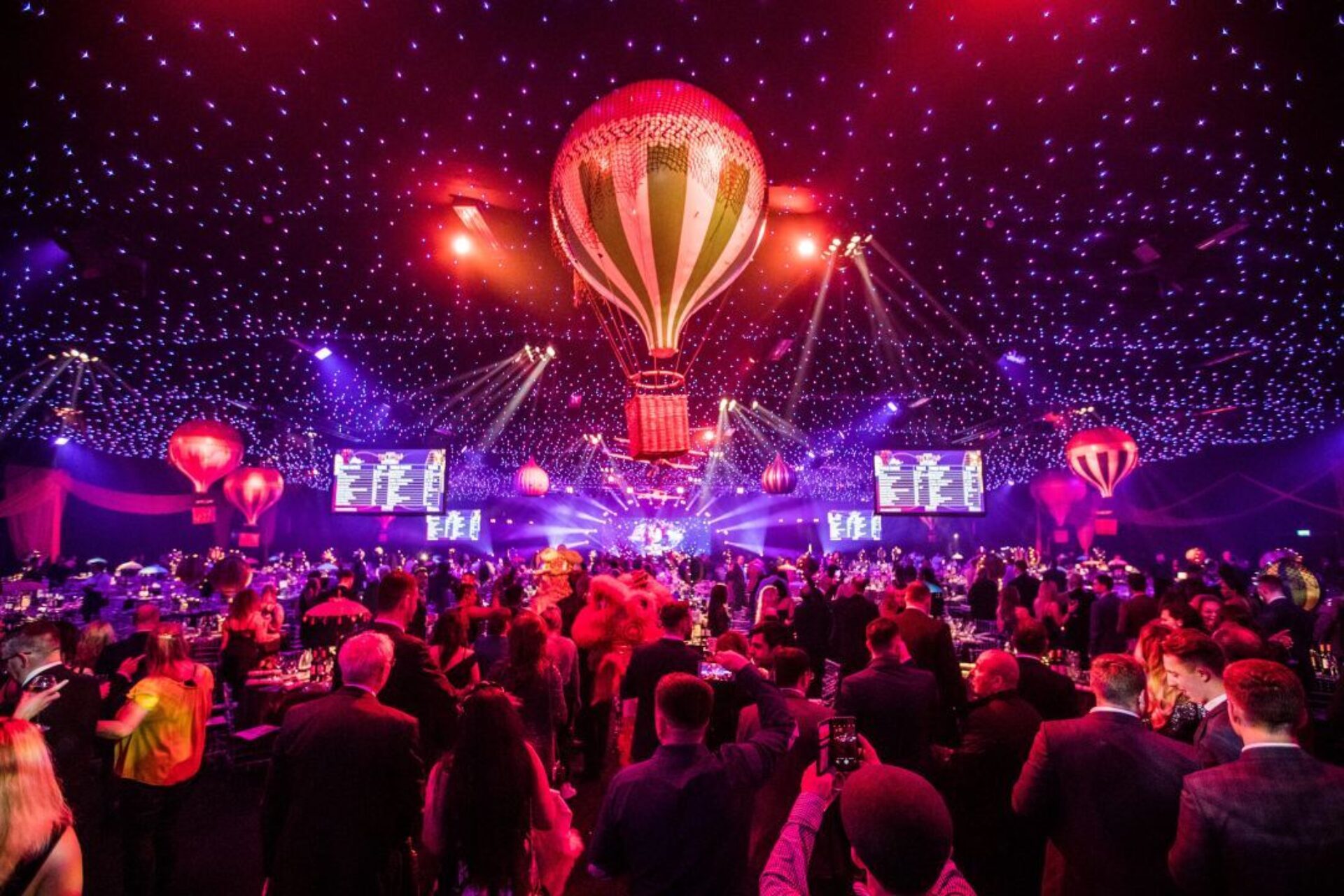
Tom: Say for example you’re building a hospitality suite on the 18th hole of a golf course and it’s got a balcony, we can show what somebody standing on that balcony would see. So the client is getting a really immersive experience of that particular viewpoint, which means they can make informed decisions about whether that’s right or wrong, and any changes they need to make.
Does creative event planning help with internal space planning too?
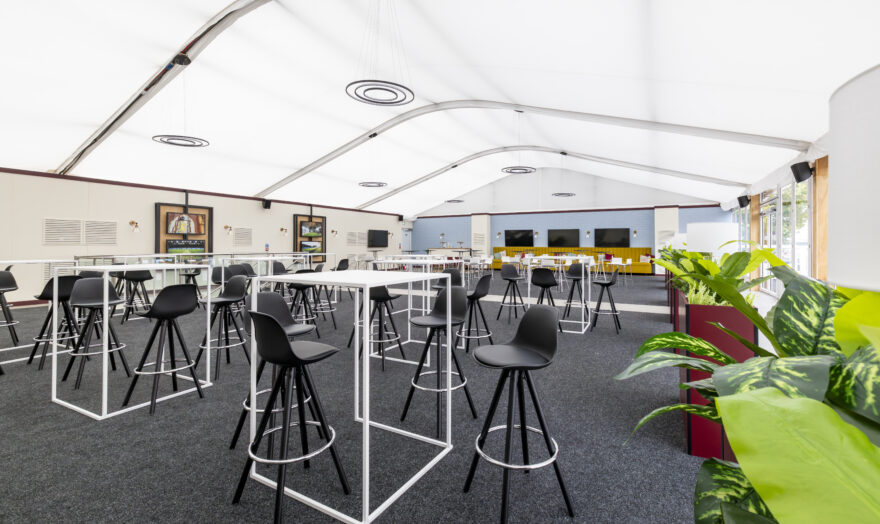
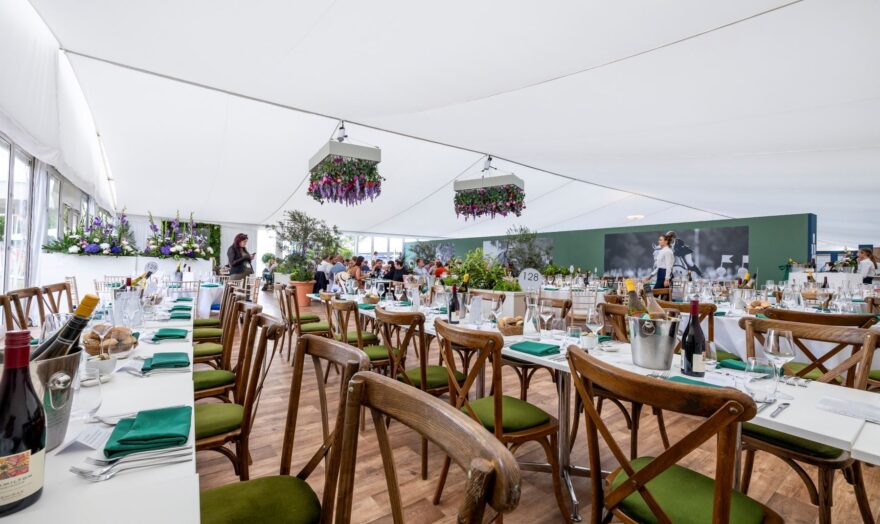
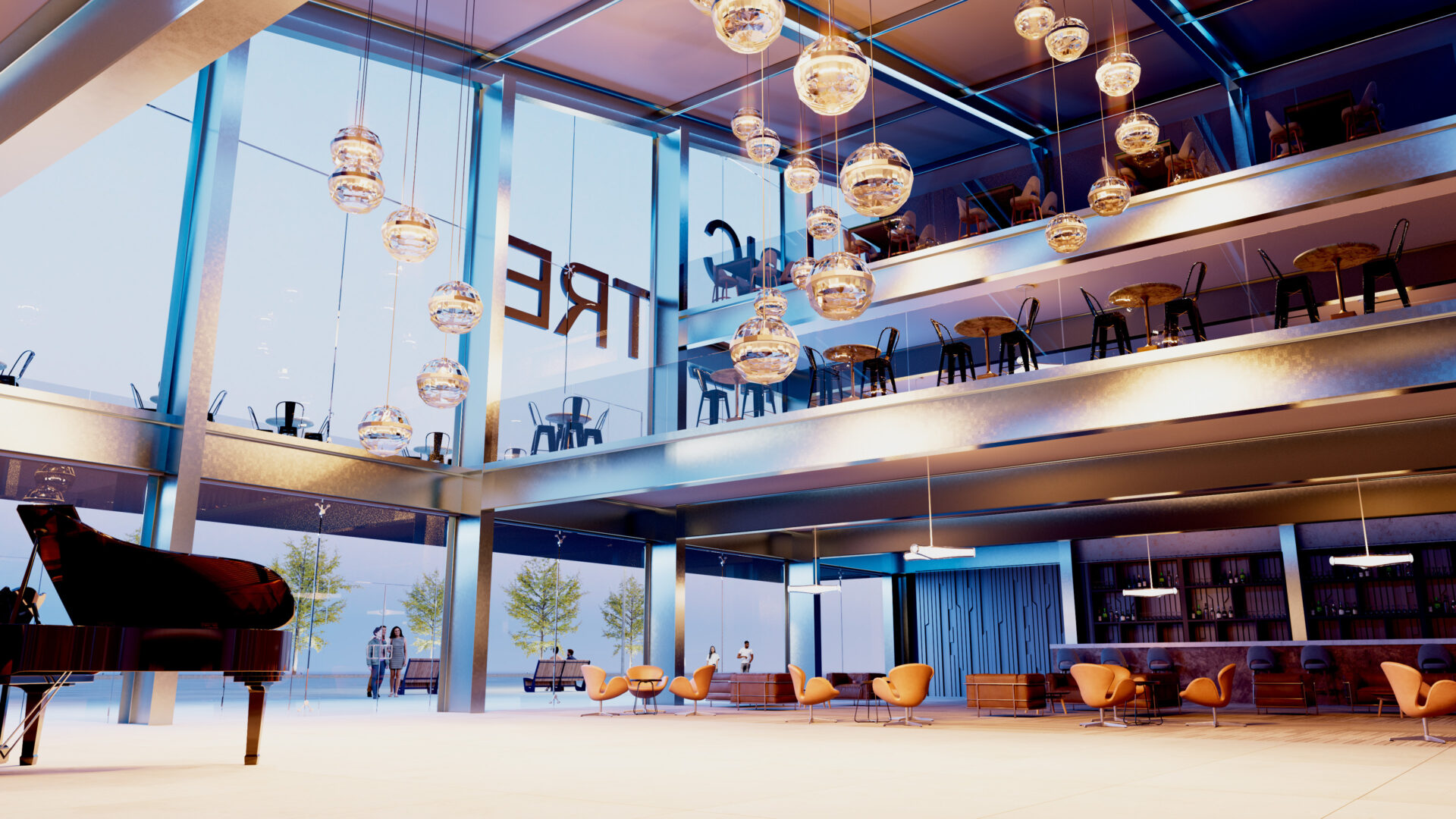
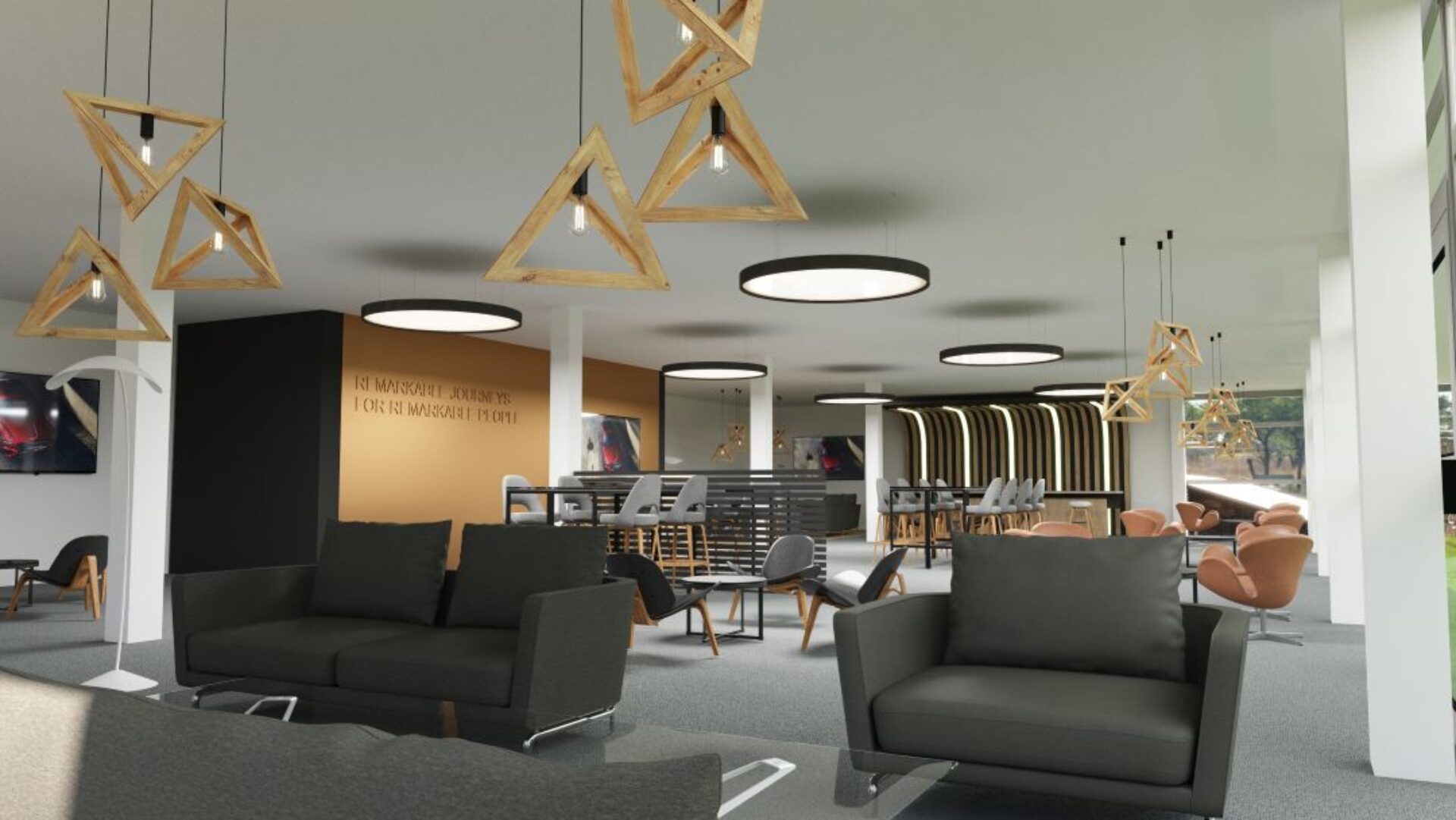
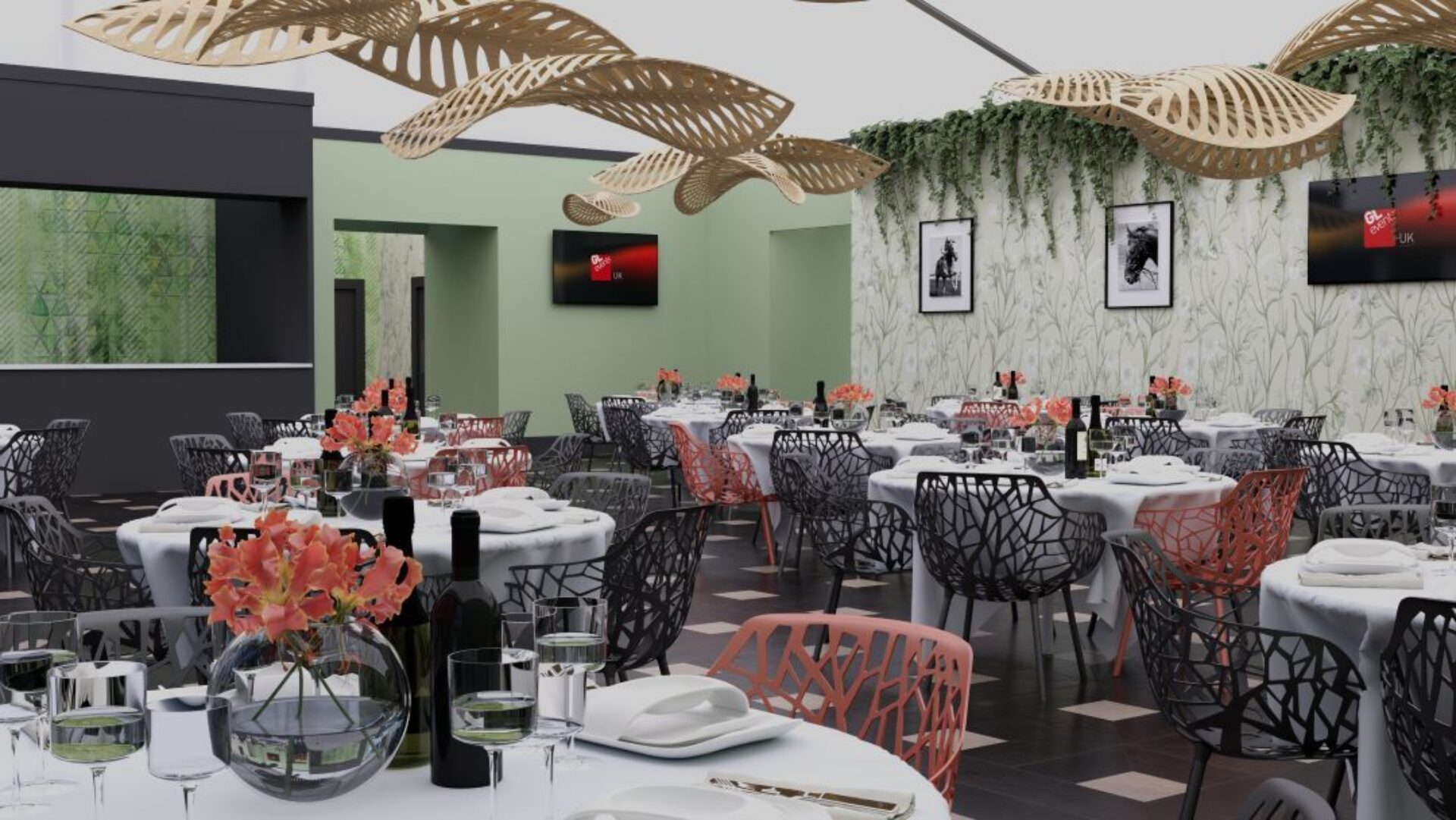
Paul: Absolutely, and the visualisations help both them and us. For example, if they’ll be having a sit-down meal, we can put the tables in, put flows in, work out routes to the toilets and make sure we’re not ending up with any bottlenecks.
They’re able to try the space and see how it feels – and for me that’s definitely one of the key benefits. We’re managing risk, because we’re enabling the client to walk around and make decisions early on, so we can work with them to get it spot on. That could be anything from moving the toilets to increasing the size of the space so it feels more comfortable.
Your specialist event partner
We provide our clients with quality event solutions, founded on an unparalleled understanding of what's needed to leave a great event legacy.
Can we use the same tech to show design aesthetics?
Tom: Definitely. One of the things that makes us different at GL is that we’ve got our own in-house designers, so they’ll be making those design decisions while taking into account all of the structural considerations too – so where the pillars are, what kind of furniture will work with the roof heights etc.
If you’ve got a designer who comes in after the fact, they’re not going to understand or factor in those constraints, and that’s where issues can crop up later. Our designers understand the uniqueness of a temporary structure and have that technical oversight as well. So they’ll do amazing things with lighting, branding and decor but they’ll know it works practically too.
Paul: Visualising the space also helps manage expectations. For example, when we did the RHS Chelsea Flower Show, we put boxing around the whole structure, which looked really nice. We were able to show the client that in our early visuals and they really bought into it.
But obviously those nice touches have cost implications, so for another client, if we knew their budget was tight, we might show them a more stripped-back design. Still interesting and cool, but more realistic for their budget. Or we can visualise different options and explain the costs of each.
Tom: Within the constraints of their budget, we’ll try to show innovative add-ons that can take a nice design and turn it into something even better. For example, if they’ve never had a structure with cladding before, we know that certain cladding can look really cool on our structures, so we can say ok, we’ve put this on the visual because we think it really elevates the space, but if you don’t like it, we can easily take it off.
Paul: It definitely supports those decision-making conversations. A client might love a particular element of the design but not have quite the budget for it, so we’d then value engineer the design, show them some new images, make tweaks and arrive at something that works both design-wise and budget-wise.
Tom: The whole creative event design process helps clients make decisions because they can clearly see what they’re getting – and very often they can stand in it and walk through it. And if they need to scale things back because their budget doesn’t quite meet their ambition, we can explore different solutions, structures and materials with them.
It’s not necessarily about problem solving – because we always work hard to anticipate problems and design them out from the start – but it’s definitely about supporting the decision-making process.
How do you start to put those aesthetic elements together?
Paul: We often put together a mood board so the whole team has a clear idea of who the client is, what their look and feel is etc. We’ll look at colour schemes, we’ll gather images and we have big libraries full of 3D assets we can drop into our CAD or fly-through visuals. That includes a huge range of furniture we can bring in from our furniture brand Xpect.
A lot of clients will also supply brand guidelines with logos, branding and colour palettes, which is great, but if they don’t have those, we can often pull a lot of those references from their website.
It’s very much about understanding the client. So while some people might be looking for those luxurious finishes – like lovely wallpapers, textures, fabrics – others will prefer a more stripped-back industrial look, so actually leaving roof linings out, leaving wires on show, adding some truss to the roof with lighting on. It’s a completely different look, but it suits their identity better. It’s about getting to know them and their brand and considering that as part of the overall design.
Who do we get round the table when we’re doing creative event design?
Tom: It’s a really collaborative process, both for us internally and in terms of the way we work with clients. So we bring our design, account management, project management, commercial and operations teams to the table.
And it’s a big, unique point of difference that we’ve got all of those people in-house. We’re not working with an external design team, we’re not scattered in different places, we’re all here. So we can sit down, have those conversations, gather round screens, tweak things. We’re having all of those conversations here at headquarters. I don’t think many companies have that same range of skills or technology that’s as well developed.
We’ve got all of that industry knowledge combined with all of that design creativity – we’re not just a technical team, we’re very creative too. So when we present a design, we push the boundaries, but we know we can build it. And we can do that within the right timeframe, for the right price.
Paul: It’s about innovation as well. So from a design point of view we might want to pitch a new concept such as a canopy on the front of a structure that maybe doesn’t exist currently. But because we’ve got everyone around the table, we can talk to our operations team who really understand our structures and are in direct contact with the manufacturers.
So they can reach out, explore what’s possible and get quotes. And all of those conversations can happen right here across our desks, which means we can put forward a proposal that’s innovative, but also realistic and on budget.
Your team of experts
Experienced, approachable and knowledgeable, our team are ready to help design your event solution.
What kind of reactions do you get when clients see the visualisations?
Tom: We’ve had some outstanding ones recently. The feedback has been really, really positive. People are often quite surprised at how realistic the visuals look, and how high-quality they are, because very often it’s hard to tell them apart from a photo.
Have you got any favourite creative event design projects?
Paul: It’s hard to pick one! For the RHS Chelsea Flower Show I really enjoyed blending the event aesthetic into all the elements of the internal design and fit out – it created something really cohesive. But I think the stand-out design project for me in 2025 was our retail fit out for LIV Golf. It was a slightly different brief and involved designing the functional fit out with lots of custom stands and clever LED lighting – the result looked really cool.
Tom: There have been so many lately, but I always remember one from further back when VR technology was just in its early stages. We did a VR headset walk-through for a client tender and it meant they could actually explore the space we’d designed, go up the stairs and walk through the different rooms.
I remember we sat in the meeting and when they put their headsets on they just couldn’t believe it was real. It really wowed them. That’s always stuck with me as a pretty special moment.
GL events UK specialises in temporary structures, seating and event infrastructure for events of all sizes, so if you’d like to explore creative event design for your next project, just get in touch.
Contact us
We'd love to help with your next project.
Recent articles